
Beyond the Surface: A Modern Approach to Pain Management
For too long, the choice for pain relief has been between slow-acting oral pills with systemic side effects and superficial creams that barely scratch the surface of discomfort. A revolution in topical analgesia has emerged, moving beyond simple salves to sophisticated systems designed for efficiency and targeted action. This article delves into the advanced science of transdermal pain relief, explaining how modern formulations are engineered to deliver active ingredients through the skin’s formidable barrier directly to the site of pain. We will explore the biological mechanisms, the distinct advantages over other methods, and the specific technology that makes this form of fast absorbing pain relief a cornerstone of modern pain management, providing a foundation of understanding for those seeking a smarter path to comfort.
The Gatekeeper: Understanding the Skin’s Protective Barrier
The primary challenge for any topical product is the stratum corneum, the outermost layer of the skin. This 15-20 cell-thick layer of corneocytes embedded in a lipid matrix is a remarkable, hydrophobic barrier designed to keep pathogens out and moisture in. It is the reason why simply applying a substance to the skin does not guarantee it will reach deeper tissues where inflammation and pain signals originate. This is the critical point that separates basic moisturizers from true therapeutic agents.
This challenge also defines the crucial difference between “topical” and “transdermal” delivery. A standard topical product is designed to work on the skin’s surface, perhaps providing a cooling sensation or minor local effect. True transdermal pain relief, however, is a systemic endeavor. It describes the process of actively transporting ingredients through the stratum corneum, into the dermis, and finally into the underlying capillaries and tissues to exert a therapeutic effect at the source. Understanding this distinction is key to recognizing why not all best topical pain relief products are created equal, and why advanced delivery systems are paramount for efficacy.
The Conduits of Comfort: Mechanisms of Transdermal Delivery
The journey of an active molecule through the skin is governed by the principle of passive diffusion—moving from an area of high concentration (the product on the skin) to an area of low concentration (the tissues beneath). However, due to the robust nature of the stratum corneum, passive diffusion alone is often insufficient for meaningful therapeutic delivery. This is where advanced science intervenes with enhanced penetration technologies.
Sophisticated formulations utilize penetration enhancers that temporarily and safely alter the structure of the skin’s lipid barrier, creating microscopic pathways for active ingredients to pass. These enhancers can work by fluidizing the lipid bilayers or by interacting with intracellular proteins. Furthermore, carrier systems are employed in an advanced topical delivery system. These can include liposomes, niosomes, or nanoemulsions—microscopic delivery vehicles that encapsulate active ingredients. These carriers protect the actives, enhance their stability, and can be engineered to fuse with skin cells, efficiently depositing their payload directly where it is needed for deep penetrating pain cream action.
The Direct Route: Why Transdermal is a Superior Pathway
The efficiency of transdermal pain relief becomes starkly clear when compared to oral medications. When you take a pill, it must survive the harsh acidic environment of the stomach, be absorbed through the intestinal wall, travel to the liver where a significant portion can be metabolized and deactivated in the “first-pass effect,” and only then enter systemic circulation to be distributed—often inefficiently—to the site of pain.
Transdermal delivery elegantly bypasses this entire convoluted pathway. Ingredients are absorbed directly into the local capillary beds, entering the systemic circulation without liver first-pass metabolism. This results in a higher bioavailability of the active compounds at the target site. This direct targeting leads to a faster onset of action, making it a source of fast absorbing pain relief. Crucially, because the delivery is more localized and efficient, it requires lower doses of active ingredients to achieve a therapeutic effect, significantly reducing the risk of systemic side effects that are common with oral medications.
The Payload: Science of Key Ingredients in Motion
The efficacy of any delivery system hinges on the payload it carries. In the realm of hemp based topical pain relief, the delivery of cannabinoids like CBD is a prime example of sophisticated science. CBD is a large, lipophilic (fat-loving) molecule, which gives it an affinity for the skin’s lipid-rich barrier. In a well-designed advanced topical delivery system, CBD can effectively permeate the stratum corneum and bind to the CB2 receptors located throughout the skin, muscle, and joint tissues. This local interaction is key to modulating the inflammatory response and interrupting pain signals at their source, explaining the profound cannabinoid topical benefits users report.
This principle extends to other anti-inflammatory compounds. Ingredients like menthol, arnica, and boswellia are not merely surface-level irritants or soothing agents. When delivered transdermally, they can penetrate to reach underlying tissues where they inhibit pro-inflammatory cytokines and enzymes like COX-2. The true power of a professional pain relief cream lies in this synergistic delivery—where multiple active ingredients are transported together to target different points of the pain and inflammation pathway simultaneously, creating a comprehensive therapeutic effect for both joint and muscle pain relief topical needs.
The Nocepta Difference: Engineered for Cellular-Level Efficacy
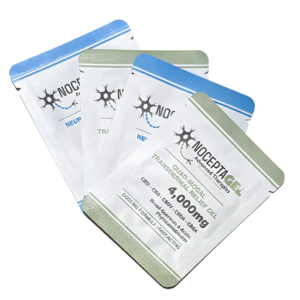
At Nocepta, our approach to transdermal pain relief is built upon these foundational scientific principles. Our formulation is more than a simple blend of high-quality ingredients; it is a precision-engineered advanced topical delivery system. We utilize a multi-faceted penetration enhancement technology that optimizes the solubility and permeability of our active compounds, including broad-spectrum cannabinoids. This ensures that our natural pain relief gel doesn’t just sit on the skin but is efficiently guided to the deeper tissue layers where it can exert its maximal effect.
Our commitment to being a doctor developed pain relief cream is reflected in our evidence-based approach. We select ingredients not only for their individual efficacy but for their synergistic potential and ability to be effectively delivered through the transdermal route. Every batch is rigorously tested for purity, potency, and consistency, ensuring that the sophisticated delivery mechanism you read about here is the same one you experience with every application. This unwavering commitment to quality and scientific integrity is what defines the benefits of transdermal creams from Nocepta.
Frequently Asked Questions
How long does it take for transdermal products to start working?
Unlike oral medications that can take 30-60 minutes, high-quality transdermal pain relief can begin working in as little as 5-15 minutes. The active ingredients start interacting with local receptors almost immediately upon penetration, providing fast absorbing pain relief directly where it’s needed.
Is transdermal delivery safe?
Yes, when formulated with high-quality, tested ingredients. Transdermal delivery is often considered safer than oral systemic medications because it minimizes gastrointestinal side effects and avoids first-pass liver metabolism, leading to a cleaner side effect profile.
Can a cream really penetrate deep enough to help joint pain?
Absolutely. This is the core function of a true deep penetrating pain cream. Advanced carriers and penetration enhancers allow active molecules to travel through the dermal and subdermal layers to reach the joint capsule and surrounding tissues, providing targeted relief.
How is this different from a heating cream like Icy Hot?
Traditional heating or cooling creams work primarily on the skin’s nerve endings through counter-irritation. Transdermal pain relief is a therapeutic delivery system designed to reduce inflammation and modulate pain signals at the tissue source, not just mask the sensation.
Why are some transdermal products more effective than others?
Efficacy hinges on the quality of the active ingredients, the sophistication of the delivery system, and the synergistic blend of compounds. A doctor developed pain relief cream will invest in advanced delivery technology, whereas basic products rely on simple, less effective absorption.
Experience the Difference of Scientifically-Engineered Relief
Understanding the science is the first step; feeling the tangible difference is the next. You no longer have to choose between ineffective solutions and unwanted side effects. Nocepta was created for those who seek answers, not just anecdotes.
We invite you to experience our clinically-inspired formulation. Visit our product page to learn more about our specific ingredients and technology, or reach out to our team with any questions. Take the step toward a smarter, more targeted approach to comfort, backed by the definitive science of transdermal pain relief.